Product standard
State the exact ASTM, AMS, ASME or project specification and its required revision.
Buyer comparison guide
Alloy 625 is primarily selected for corrosion resistance and solid-solution strength. Alloy 718 is precipitation hardenable and is selected when substantially higher mechanical strength is required.
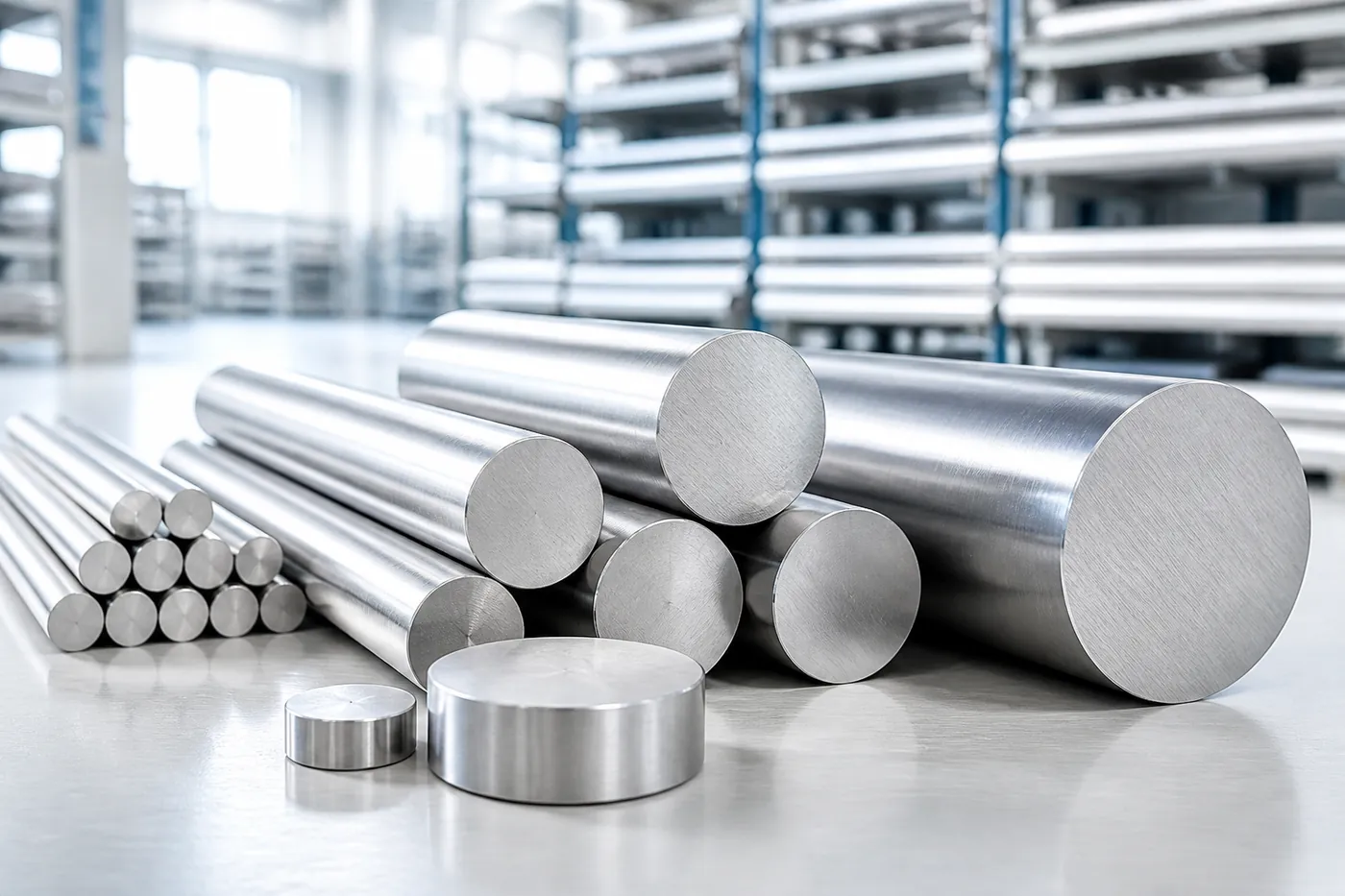 Final alloy selection must follow the drawing, design conditions and governing specification.
Side-by-side
The grade name alone is not enough for a comparable quote. Product form, condition, melt route, testing and certification can change both suitability and cost.
| Buyer question | Alloy 625 | Alloy 718 |
|---|---|---|
| UNS / W.Nr. | N06625 / 2.4856 | N07718 / 2.4668 |
| Strengthening | Solid-solution strengthened | Precipitation hardened |
| Primary selection focus | Corrosion resistance, weldability and useful strength | High tensile, fatigue, creep and rupture strength |
| Heat-treatment sensitivity | Condition still matters; not age hardened for strength | Solution and aging cycle is critical |
| Frequent forms | Plate, sheet, strip, bar, pipe, tube, wire | Round/forged bar, plate, sheet, strip, forgings |
| Common applications | Marine, chemical processing, pollution control | Aerospace, energy, fasteners, rotating components |
Quote accuracy
Include these items before comparing suppliers.
State the exact ASTM, AMS, ASME or project specification and its required revision.
For Alloy 718, clearly state mill annealed, solution treated, or solution treated and aged.
Vacuum melting, remelting, ultrasonic testing and aerospace approvals can materially affect cost.
Give finished size, machining allowance, tolerances, cut lengths and quantity per size.
Alloy inquiry
We will review the specification and documentation requirements before preparing a targeted quotation.
INCONEL is a trademark of the Special Metals Corporation group of companies. Laixi (Shandong) Special Steel Co., Ltd. is not presented as the trademark owner.